

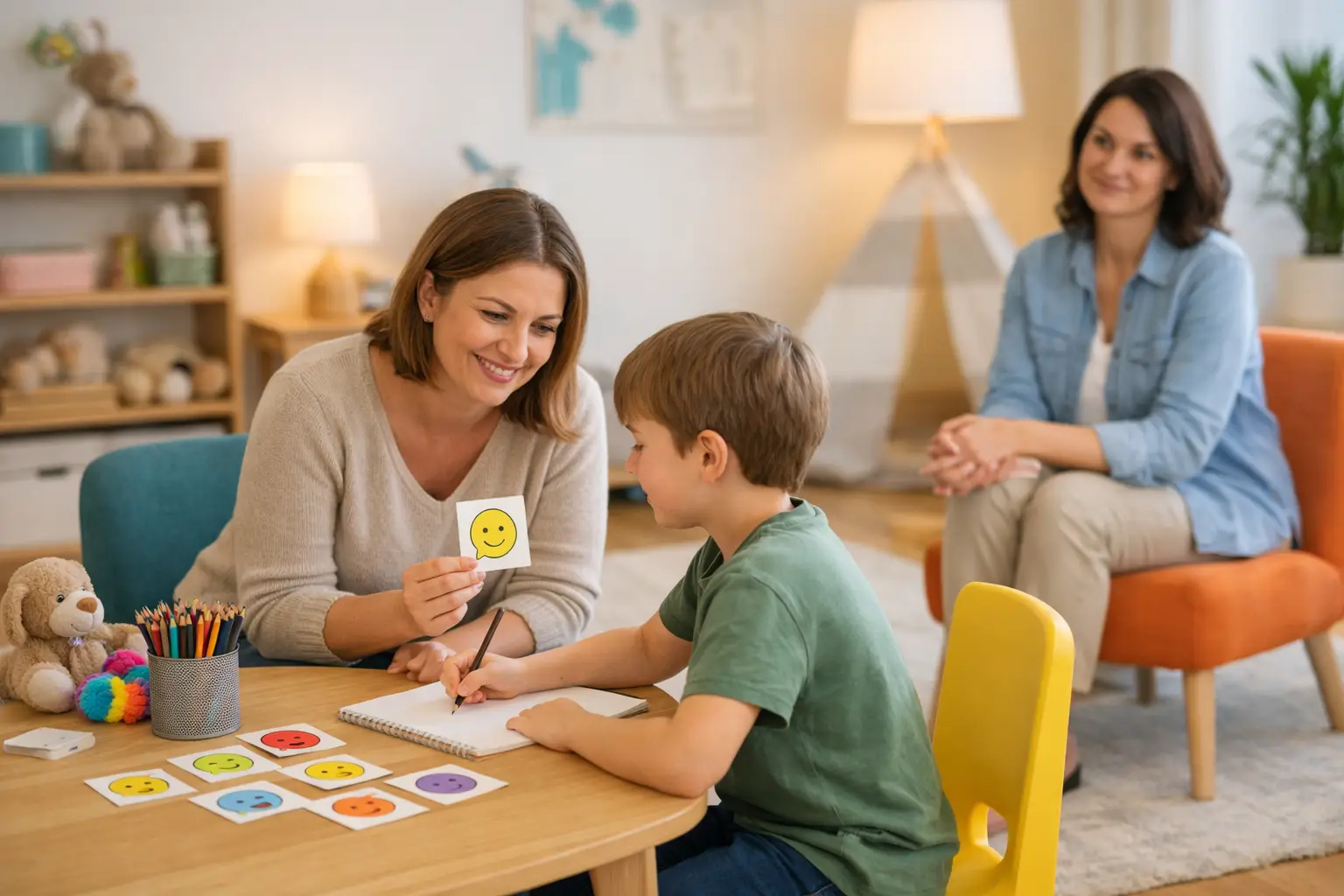
The Sunday-night tummy ache. The tears at the school gate. The child who seems perfectly fine all day, then cannot settle at bedtime because their mind will not switch off. Children’s therapy for anxiety can help when worries are beginning to take up too much space – at home, at school, with friends or inside a young person’s own head.
Anxiety is not always loud. Some children become clingy, angry or tearful. Others go quiet, avoid things they once enjoyed, constantly ask for reassurance or complain of headaches and feeling sick. Teenagers may look withdrawn, irritable or endlessly distracted by their mobile phone, while privately feeling overwhelmed. None of this means a child is being difficult or that you have somehow got parenting wrong. It usually means they need support to make sense of feelings that have become too big to manage alone.
What anxiety can look like in children and teenagers
Children do not always have the words to say, “I feel anxious.” Their worries may show up through behaviour, sleep, physical symptoms or a sudden need for everything to feel certain. A child might refuse school, panic about being away from home, struggle with tests, fear being sick, avoid sleeping alone or worry intensely about something happening to someone they love.
For some, there is an obvious trigger: a move, friendship problems, bullying, illness in the family, exams or a difficult experience. For others, anxiety seems to build gradually. They may have always been sensitive or prone to overthinking, but the coping strategies that once worked are no longer enough.
It also matters to remember that a degree of worry is part of growing up. Starting secondary school, giving a presentation or meeting new people can feel daunting. The concern is not whether your child ever feels anxious. It is whether anxiety is stopping them from doing ordinary things, affecting sleep or family life, or making them unhappy more often than not.
When children’s therapy for anxiety may be useful
Therapy is not a punishment, and it is not reserved for children in crisis. It is a supportive space where a young person can talk, learn practical ways to calm their body and mind, and feel understood without worrying about upsetting their parent or carer.
It may be time to consider support if anxiety is lasting for several weeks, becoming more intense, or regularly getting in the way of school, friendships, family routines or sleep. Reassurance can be helpful, but when a child needs the same reassurance again and again, it can be a sign that they need more than a quick answer. They need tools that help them feel safer within themselves.
A child does not have to be able to explain exactly what is wrong before therapy can help. In fact, many cannot. Younger children may express themselves more easily through simple activities, stories, pictures or talking about what happens in a typical day. Teenagers may need time before they trust that they will not be judged, lectured or told to “just be positive”. A good therapeutic relationship makes room for that.
Therapy should fit the child, not the other way round
There is no single script for anxious children. A chatty ten-year-old who is frightened of dogs will need a different approach from a sixteen-year-old who is exhausted by panic, social pressure and constant overthinking.
Sessions can combine talking therapy, practical coping techniques and a neuroscience-informed understanding of what happens when the brain’s alarm system becomes overactive. The aim is not to persuade a child that there is nothing to worry about. It is to help them recognise the alarm, understand why it is firing, and respond in a way that gives them more choice.
That might include noticing early physical signs of anxiety, practising calmer breathing, finding a more helpful way to answer frightening thoughts, building confidence in small manageable steps, or working gently with a specific fear. Parents and carers can also be given guidance on how to support progress at home without accidentally feeding the worry cycle.
What about hypnotherapy for a child with anxiety?
Hypnotherapy can be a useful part of therapy for some children and teenagers, particularly where anxiety, fears, sleep difficulties or confidence are involved. It is not stage hypnosis, mind control or being made to do anything embarrassing. Your child remains aware, able to speak, and in control throughout.
Put simply, hypnotherapy uses focused attention and relaxation to help a young person access a calmer state and practise helpful ideas in a way that can feel easier than trying to reason with an anxious mind at full volume. For children with lively imaginations, this can be particularly engaging. It may involve visualisation, stories or familiar situations that help them rehearse feeling more capable and settled.
It is not right for every child, and no ethical therapist should promise a miracle in one session. Some children love the approach straight away; others prefer practical conversation and strategies they can use at school. The work should always be adapted to their age, personality and what feels comfortable for them.
What parents and carers can do alongside therapy
You do not need to become your child’s therapist. Your job is to be their safe adult, which is already a very important role. Listening without immediately trying to fix everything can make a real difference. So can naming what you notice: “You seem worried about tomorrow,” rather than “You are fine.”
Try to take worries seriously without treating every feared outcome as likely. If a child is anxious about school, for example, it is tempting to let them stay home whenever they are distressed. Occasionally that may be needed, but repeated avoidance often teaches the anxious brain that school really was dangerous. Small, supported steps back towards the feared situation are often more helpful than forcing a child through it or avoiding it completely.
Predictable routines can also take pressure off. Regular meals, sleep routines, movement, downtime and a calmer lead-in to bed all support an overstimulated nervous system. This is not about creating a perfect household. It is about making a few parts of the day feel reliably safe and steady.
Be mindful of reassurance, too. Saying “nothing bad will happen” may soothe a child briefly, but it can create a loop where they need you to say it again. A more useful response might be: “I can see this feels scary. What could help you handle the feeling if it turns up?” That builds confidence without dismissing their fear.
What to expect from the first appointment
The first session should feel like a conversation, not an interrogation. Parents or carers are usually involved so there is a clear picture of what has been happening, what has already been tried and what everyone hopes will improve.
A therapist may ask about school, friendships, sleep, family life, health, worries, strengths and the times when anxiety is less intense. This is not about looking for fault. It helps identify patterns and decide what kind of support is likely to be most useful.
At Emma Newman Hypnotherapy, sessions are tailored, Into an 5 week program, they are informal and interactive. The focus is on helping young people feel calmer, sleep better, manage big feelings and trust themselves more. Teaching tools to help them to cope with worries. Appointments are available in person in Middleton and by video across the UK, which can be useful for teenagers who feel more at ease talking from home.
When to seek more urgent help
Therapy can be a valuable source of support, but some situations need urgent medical or safeguarding help. If your child is talking about harming themselves or someone else, has made an attempt to hurt themselves, seems unable to stay safe, or you are seriously concerned about their mental state, contact 999, visit A&E, or seek urgent help through your GP or local crisis service. Trust your instincts here.
For less immediate but significant concerns, such as persistent school refusal, severe panic, eating difficulties or a marked change in behaviour, speak with your GP as well as considering private therapy. Different forms of support can work alongside each other.
Your child does not need to become fearless to feel better. They need to learn that a worried thought is not a command, a racing heart is not always danger, and difficult feelings can pass. With the right support, that learning can begin to make everyday life feel lighter again.



0 Comments