

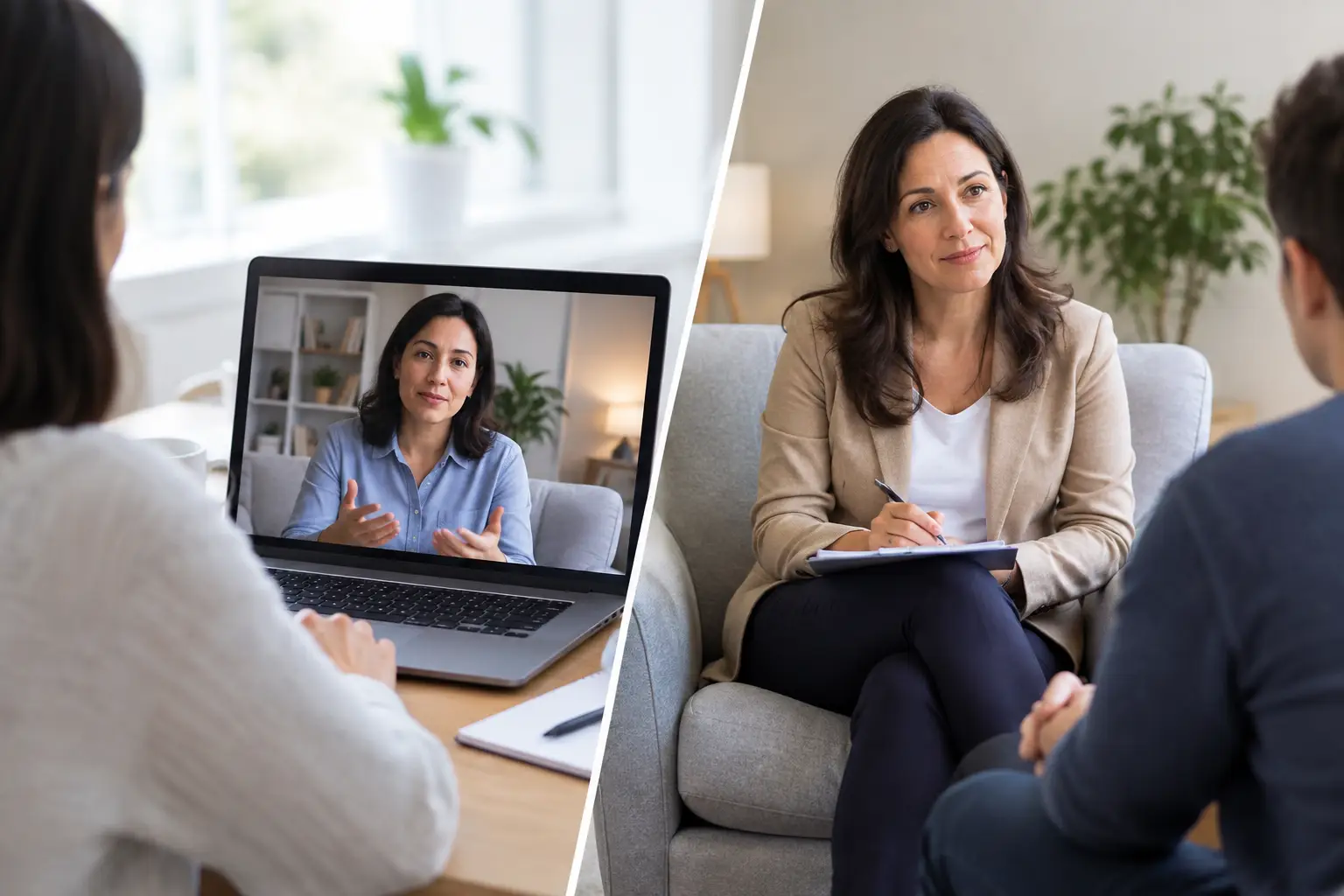
When people search for online / video link in-person therapy, they are often not looking for a technical answer. They want to know something much more personal: will this feel safe, will I be able to talk honestly, and can it actually help me feel less overwhelmed?
Whether you are dealing with anxiety that will not switch off, poor sleep, panic, a phobia, low confidence or a child who is struggling with big feelings, the best format is usually the one that makes it easier to show up and engage. Both online and face-to-face therapy can be effective. The right choice depends on what you need, what feels comfortable and what is realistic for your life right now.
Online/video link and in-person therapy: the real differences
The main difference is not the quality of care. It is the setting in which the conversation happens.
In-person therapy gives you a dedicated place away from home, family demands and the jobs waiting to be done. For some people, walking into a calm, private room helps their mind recognise that this time is for them. They may find it easier to focus, settle and speak about difficult things without worrying that someone might overhear through a thin wall at home.
Online / video link therapy takes place by secure video call, usually from wherever you are at home/work/ the car (pulled up safely of course!) . It can be a real relief when travelling feels difficult, work and childcare leave little spare time, or anxiety makes leaving the house feel like too much. You still have a private, one-to-one conversation, but without the journey, parking or rushing to fit an appointment around the school run.
Neither option is automatically better. Some clients like the clear boundary of coming to a therapy room. Others feel more open with a cup of tea beside them on their own sofa or even in their pjs in bed! You may know straight away which you prefer, or you may only find out after trying a session.
What online /video link therapy can offer
Online / video link sessions are not second-best therapy. A thoughtful, interactive video session can offer the same space to talk things through, understand patterns and practise tools that help you respond differently when life feels hard.
It can be particularly useful if stress, low mood or social anxiety have made everyday tasks feel heavier. On a difficult day, not having to get dressed up, travel across town or sit in traffic can mean the difference between getting support and putting it off again.
For people across the UK, online / video therapy also means you can choose a therapist whose approach feels right rather than limiting yourself to the nearest available appointment. Evening video sessions can make therapy more manageable alongside work, caring responsibilities or family life.
There are practical points to consider. You need a reasonably reliable internet connection, a device with a camera and, ideally, somewhere private. A parked car may work in an emergency, but a comfortable room where you can speak freely is much better. Headphones can help if other people are nearby.
If home is busy or emotionally difficult, online /video sessions may feel less restful. Some people find they are interrupted by children, pets, deliveries or the thought of the washing that needs hanging up. This does not mean online / video therapy cannot work, but it is worth being honest about whether you can protect that hour.
Can hypnotherapy work online / video link?
Yes. Hypnotherapy can work very well by video when you are in a quiet, safe place where you will not be disturbed. You remain awake, aware and in control throughout. It is not like being asleep, being made to cluck like a chicken, or handing over control of your mind.
Hypnosis is a focused, relaxed state, rather like becoming absorbed in a book or daydreaming during a familiar journey. The therapist guides you, but you are always able to hear, speak and choose what feels right for you. Online sessions can even have an advantage for some people, as they are already in the place where they can rest afterwards.
Why face-to-face sessions still matter
There is something valuable about being met by another person in the room, particularly when you have spent a long time keeping everything in. You do not need to perform, explain yourself perfectly or turn up with the right words. The session is a place to pause and begin where you are.
Being in person can also feel more containing when emotions are close to the surface. You may appreciate the gentle structure of arriving, settling in, talking and then leaving with a clearer head. For some clients, especially those who spend their working day on screens, an appointment away from a laptop feels like a welcome change.
Face-to-face therapy can be a good choice for children and teenagers too. Younger clients often communicate through activities, drawing, stories and conversation rather than sitting and giving a neat account of their feelings. Being together in a welcoming room can help the relationship develop naturally.
Emma Newman Hypnotherapy offers in-person appointments in Middleton, within easy reach of Manchester, Oldham, Rochdale, Bury, Blackley, Prestwich and Whitefield. For local clients, this can provide that useful breathing space between home and the rest of the day.
Choosing the format that helps you show up
Try not to put pressure on yourself to choose perfectly. Therapy is personal, and practical details matter. The most helpful question is often: where am I most likely to feel safe enough to be honest and able to attend consistently?
In-person support may suit you if you need a break from home, want fewer distractions, feel reassured by meeting face to face or would benefit from a clear routine. It may also be preferable if your home does not offer enough privacy.
Online / video link therapy may suit you if your diary is packed, travelling is difficult, you live further away, have mobility or health concerns, or feel calmer speaking from familiar surroundings. It can also be a sensible starting point if getting out of the house is currently a big hurdle.
For parents, the decision can be different for each child. One teenager may be comfortable talking on video after school, while another may need the reassurance of a face-to-face appointment. A child who is shy at first might open up while doing something alongside the conversation. What matters is that the approach is tailored, rather than expecting every young person to fit one format.
The relationship matters more than the screen or sofa
It is easy to focus on whether online or in-person therapy is the better option, but the therapeutic relationship matters most. You need to feel heard, respected and not judged. You should be able to ask questions, say when something does not feel right and understand what you are working towards.
Good therapy should not feel cold, scripted or full of jargon. You may talk about why anxiety keeps returning, how your nervous system responds to stress, the habits that have become stuck, or the experiences that have knocked your confidence. Alongside that understanding, you need practical ways to cope between sessions.
For example, someone with panic may learn how to respond to frightening body sensations without adding more fear. Someone lying awake at night may begin to understand why their mind becomes busiest when the house is quiet, then practise ways to settle it. A child with a school-related worry may need help naming the feeling, building confidence and giving parents clear ways to support them at home.
Progress is not always dramatic. Often it looks like sleeping a little better, speaking up once when you would normally stay quiet, getting through a feared situation, or noticing an anxious thought without immediately believing it. Those small shifts matter because they build evidence that change is possible.
A few practical questions before you book
Before choosing online / video or face-to-face therapy, consider whether you can attend regularly, what time of day you have most emotional energy, and where you are likely to have privacy. If you are considering hypnotherapy, it is also reasonable to ask how it will be used and what you can expect during a session.
A free, no-obligation telephone consultation can be a useful first step if you are unsure. You do not have to commit before you have asked the questions that are circling in your mind. Feeling nervous about therapy is common, especially if you have been carrying things alone for a long time.
The best starting point is not the format that sounds most impressive. It is the one that gives you enough safety, time and support to begin. A quiet video call or a familiar therapy room can both become a place where you breathe more easily, think more clearly and start feeling more like yourself again.



0 Comments