

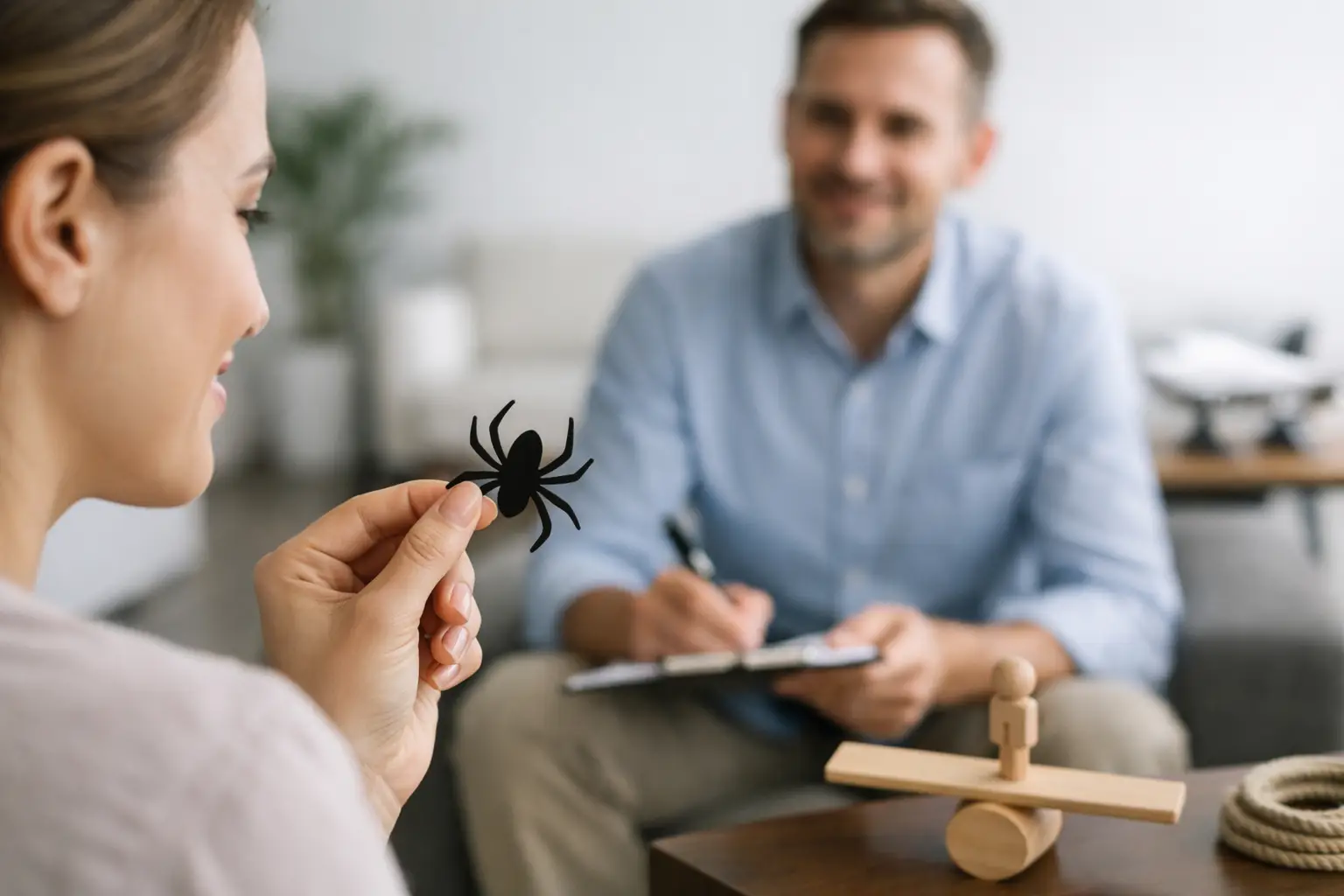
You may know your fear does not make logical sense, yet that does not stop your heart racing when a spider appears, a flight is booked or a dental appointment is due. Phobia treatment is not about telling you to “just get on with it”. It is about helping your mind and body feel safer, so the fear no longer gets to make every decision for you.
A phobia can quietly shrink life. You might take a longer route to avoid a bridge, turn down a holiday because of flying, check every room for spiders, or feel embarrassed about needing someone else to deal with a situation. On the outside, it can look small. On the inside, it can feel exhausting.
When does a fear become a phobia?
Fear has a job. It helps us notice danger and respond quickly. A phobia is different because the alarm response is much bigger than the actual risk, or continues long after the threat has passed.
The reaction can be immediate and physical: a tight chest, nausea, shaking, dizziness, tears, a desperate urge to escape or a full panic attack. You may also spend days worrying about something that has not happened yet. Avoidance brings short-term relief, which makes perfect sense at the time, but it can teach the brain that the feared thing really was too dangerous to face. The cycle then becomes stronger.
Common phobias include spiders, dogs, needles, dentists, vomiting, driving, enclosed spaces, heights and flying. Some people fear social situations or public speaking. Others have a fear that feels very specific but has a surprisingly large impact on everyday life.
There is nothing silly about a phobia. Your nervous system is trying to protect you. It has simply learned to press the panic button too quickly.
What phobia treatment actually involves
Effective support is personal. Two people may both dislike flying, for example, but one may be frightened of feeling trapped, another may fear panic itself, and another may have had a difficult experience on a previous flight. The treatment needs to make sense of your fear, not just its label.
First, understanding the pattern
A good first step is talking through what happens before, during and after the fear response. What triggers it? What do you imagine will happen? What do you do to cope? How much is it affecting work, family life, travel or your confidence?
This is not an interrogation, and you will not be made to describe distressing details before you feel ready. It is a conversation that helps identify the pattern. Sometimes the fear has an obvious starting point. Sometimes it has built gradually, or has become worse during a stressful period. Both are common.
It is also worth checking whether the problem is a straightforward phobia or whether anxiety, panic, trauma, health concerns or obsessive thoughts are playing a part. The answer changes the best way forward. Therapy is not one-size-fits-all, and pretending otherwise does nobody any favours.
Then, calming the alarm system
Phobias do not live only in thoughts. They show up in the body. That is why being told that a plane is statistically safe or that a spider is tiny often does very little when your stomach has dropped through the floor.
Treatment can include practical ways to settle the nervous system, notice anxious thoughts without automatically believing them, and respond differently to the physical sensations of fear. As you practise, the aim is not necessarily to feel completely relaxed every second. It is to know that you can tolerate discomfort, stay present and recover.
That shift matters. Confidence is rarely the absence of fear. More often, it is the growing experience of, “I felt anxious, and I still managed.”
Gradual exposure, never being thrown in at the deep end
For many phobias, gentle, planned exposure is a useful part of treatment. This means approaching the feared situation in manageable stages rather than avoiding it completely or forcing yourself into the hardest version on day one.
Someone with a needle phobia might begin by talking about medical appointments, looking at a picture, or sitting near a surgery without having an injection. Someone afraid of dogs might first work with imagined situations, then watch a calm dog from a distance, before deciding what feels like a realistic next step.
The pace matters. Going too fast can leave you overwhelmed and reinforce the fear. Going so slowly that nothing ever changes can keep avoidance in charge. A therapist helps you find the middle ground: enough challenge for your brain to learn something new, with enough support to keep you feeling safe and in control.
How hypnotherapy can support phobia treatment
Hypnotherapy can be a helpful part of an integrative approach to phobias, particularly when fear feels automatic or you find yourself reacting before you have had time to think.
Despite what stage shows might have suggested, you are not asleep, unconscious or under someone else’s control during hypnotherapy. You remain aware and able to speak, move, stop or question anything at any point. For many people, it feels like a deeply focused, calm state – rather like becoming absorbed in a book or daydream.
Used alongside therapeutic conversation and practical techniques, hypnotherapy may help you rehearse a calmer response, reduce the intensity of anxious anticipation and build a stronger sense of control. It can be especially useful when your mind understands the fear but your body has not caught up yet.
It is not a magic trick, and no ethical therapist should promise to erase a phobia in a single session. Some people notice change quickly; for others, progress takes longer, especially if the fear is linked with panic, trauma or years of avoidance. What matters is having a clear, collaborative plan that can be adjusted as you go.
What tends to keep phobias going
Avoidance is understandable, but it is often the fuel for a phobia. So are the safety behaviours we use without noticing: sitting only near an exit, endlessly checking the weather before a flight, carrying items “just in case”, asking for constant reassurance or relying on someone else to take over.
These habits can be useful in the short term. The difficulty is that they can stop you discovering that you are more capable than the fear says you are. Treatment is not about stripping away every coping strategy at once. It is about gradually choosing which ones genuinely help and which ones are keeping the alarm switched on.
Trying to shame yourself out of a phobia is unlikely to work either. Calling yourself ridiculous may add frustration to an already difficult situation. A kinder and more practical question is: what would I be able to do if this fear took up less space in my life?
Phobias in children and teenagers
Children can have very real, very intense phobias too. A fear of dogs, insects, being sick, school, sleeping alone or medical procedures can affect the whole family. Parents often end up walking on eggshells, trying to reassure their child while also worrying that they are accidentally making the fear bigger.
The right support for a child or teenager should feel age-appropriate, interactive and unthreatening. It may use conversation, imagination, practical coping tools and small confidence-building steps. The aim is not to dismiss their fear or force bravery. It is to help them feel understood, capable and less ruled by worry.
Parents and carers are often part of the process too. Small changes in how reassurance, routines and avoidance are handled can make a meaningful difference at home. No parent gets this perfectly, particularly when everyone is tired and stressed. Support can give you a clearer way forward.
Choosing support that feels right
You do not have to wait until a phobia has stopped you living your life completely. If you are avoiding things you want or need to do, losing sleep over an upcoming event, or arranging your world around fear, it is reasonable to ask for help.
Look for a therapist who takes time to understand your individual experience and explains the process in plain English. You should feel able to ask questions, including whether hypnotherapy is involved, what sessions might feel like and how progress will be measured. Feeling safe with the person you are working with is not an extra. It is part of the work.
Emma Newman Hypnotherapy offers tailored support for adults, teenagers and children, with appointments in Middleton and video sessions across the UK. A free, no-obligation telephone consultation can be a gentle first step if you are unsure whether therapy is for you.
Fear may have been calling the shots for a long time, but it does not have to stay that way. Change can begin with one honest conversation, one manageable step and the chance to feel calmer in situations that once felt impossible.



0 Comments